
Nice is a city that’s perfect for strolling. The sea is almost always nearby; the Old Town gradually gives way to the waterfront, and in just a few minutes you can walk up from the bustling streets to a spot where you can see the entire bay.
Nice is a blend of France and Italy, the Mediterranean and the Alps, an old Provençal city and 19th- and early 20th-century resort architecture. Matisse and Chagall lived and worked here; Russian writers, artists, and aristocrats visited the city; and Nice itself changed its national affiliation several times, finally becoming part of France only in 1860.
Here we’ve put together a few places and walks that we especially love and recommend to participants in Gestalt Dialogues. We feel that getting to know Nice is also part of our “Dialogues”: an opportunity to step outside our usual surroundings, slow down a bit, and engage in a dialogue with the city, the sea, and the surrounding landscape.
The Old Town and the Sea
Old Town / Vieux Nice

The best place to start exploring Nice is the Old Town. It’s a labyrinth of narrow streets between Place Masséna, the Château Hill, and the sea. There’s almost no need to plan a route here: it’s more fun to just wander wherever you please, turn down side streets, and pop into small shops, churches, and cafés.
The architecture of Old Nice is more Italian than French: ochre and red facades, green shutters, narrow streets, and laundry hanging overhead serve as reminders that, for most of its history, Nice was linked to Savoy and Piedmont.
It’s worth taking a stroll down Rue Droite, Rue de la Préfecture, and the side streets around them, and stopping by Place Rossetti and the Sainte-Réparate Cathedral.
Saleya Market / Cours Saleya

From the Old Town, be sure to head to Cours Saleya—a long pedestrian square located almost right by the sea.
In the morning, the famous flower and produce market is open here. It’s a great place to check out local products, buy fruit, olives, and cheeses, or try socca—a thin flatbread made from chickpea flour, one of Nice’s most iconic dishes.
There are plenty of cafes and restaurants around the market, and it’s literally just a few dozen meters from Cours Saleya to the sea.
English Promenade / Promenade des Anglais
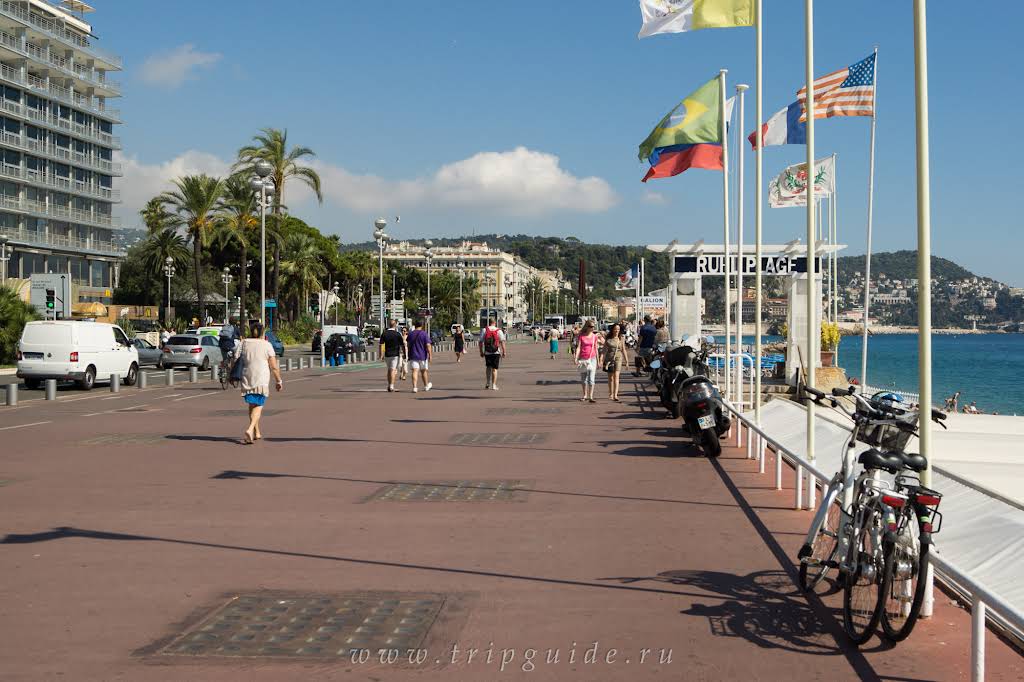
Nice’s main promenade stretches for several kilometers along the Bay of Angels—Baie des Anges. It’s especially nice to take a walk here in the morning or as sunset approaches. You can simply walk along the sea, sit on the famous blue chairs, head down to the beach, or rent a bike.
If you walk west from the Old Town, you’ll come across the Jardin Albert 1er, the legendary Negresco Hotel, and the Musée Masséna with its small garden. But perhaps the main attraction here is the sea itself. In Nice, it’s not so much a separate attraction as it is a constant backdrop to city life.
Castle Hill and the Port
Colline du Château
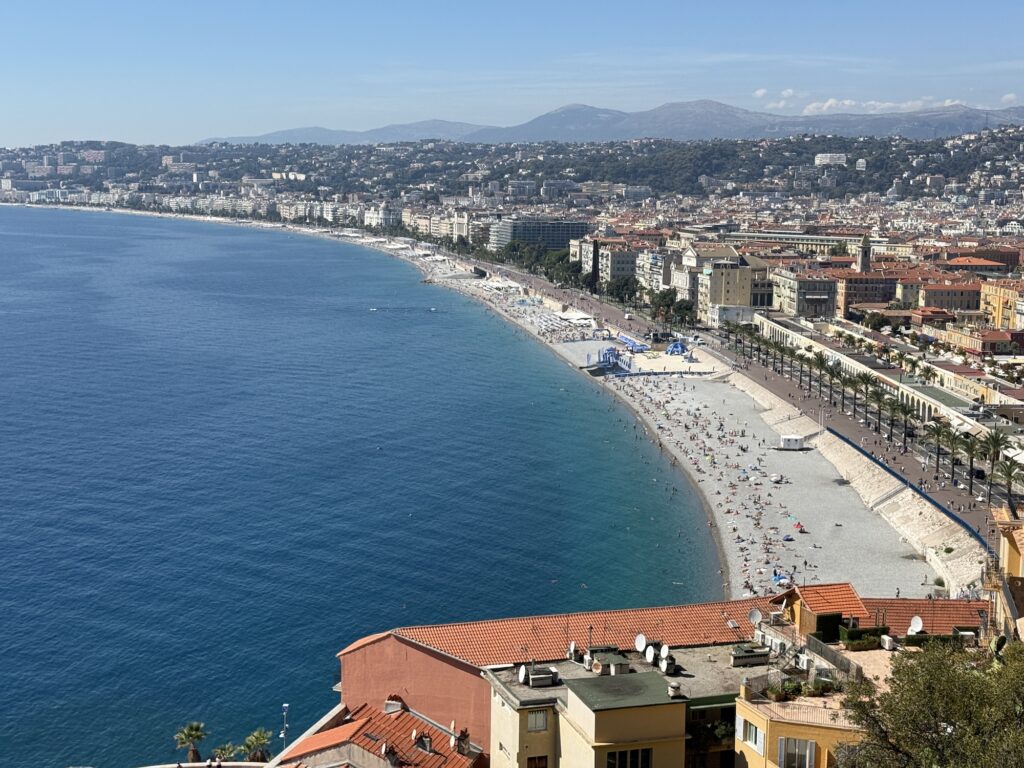
Despite its name, there is no longer a castle on Castle Hill. However, this spot offers perhaps the best view of Nice: the Old Town, the red rooftops, the Promenade des Anglais, and the vast arc of the Baie des Anges. The hill features a large, shady park, an artificial waterfall, and several observation decks.
You can walk up the stairs from the Quai des États-Unis side or take the free elevator at the base of the hill. We recommend taking your time on the way back down: walk through the entire park and exit on the other side toward the port.
Port of Nice / Port Lympia
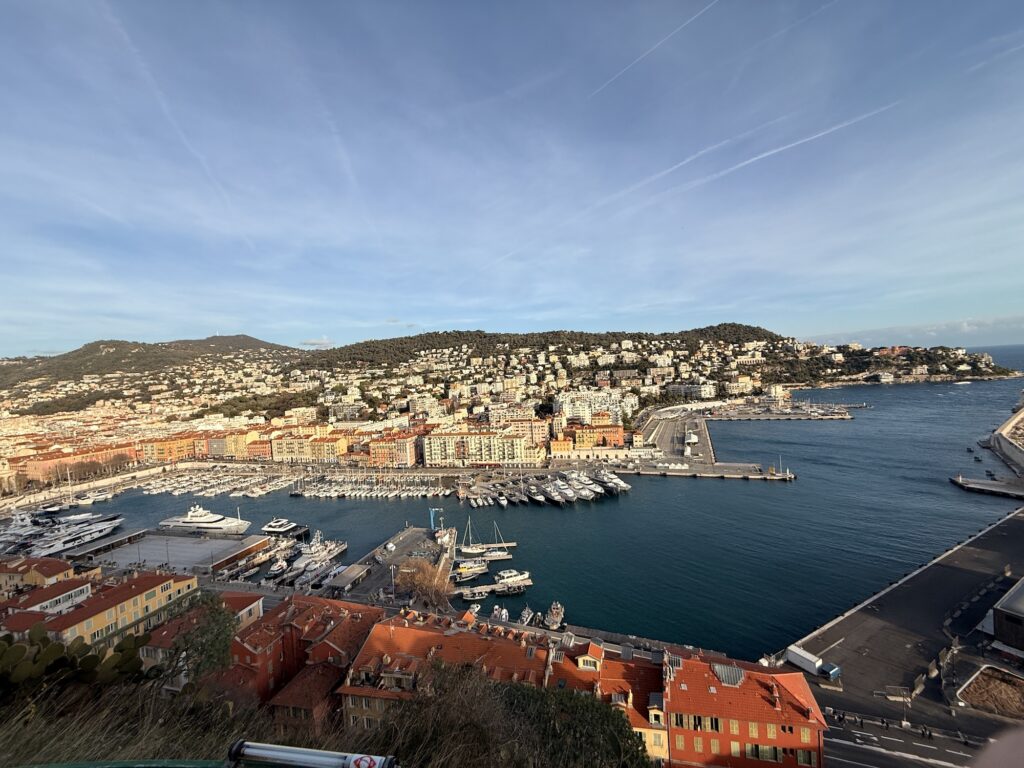
On the eastern side of the Chateau hill lies Nice’s old port—Port Lympia. This is a completely different side of Nice: small boats sit side by side with yachts, traditional red and yellow houses line the area, and a little further on, the less touristy neighborhoods begin.
From here, walk along the waterfront on the Quai des Deux Emmanuels, then head toward Île de Beauté Square and the Notre-Dame du Port Church. If you still have energy, you can continue your walk all the way to the cape.
From the Port to Coco Beach

One of our favorite walks starts behind the harbor and follows Boulevard Franck Pilatte along the sea. Here, the feeling of being in a big city gradually fades away. Beyond the yacht club are small rocky beaches, and further on—Coco Beach and the start of the Sentier du Littoral coastal walking trail.
The trail runs right along the sea, past cliffs and small coves. It’s a wonderful place if you want to get away from the tourist hub for a bit and just spend some time by the sea.
Simie—a different kind of Nice
Simie and the Roman Cemenelum / Cimiez
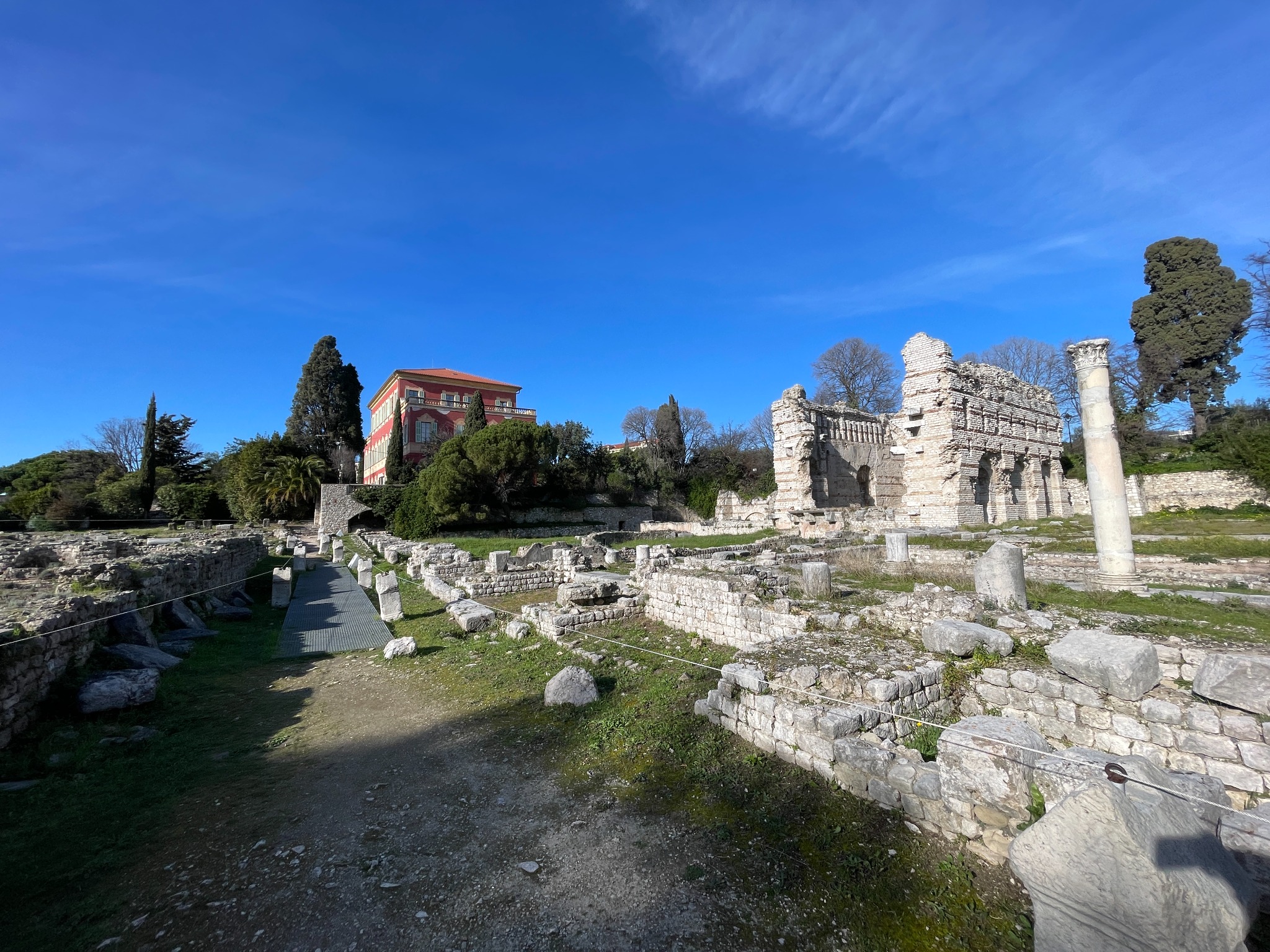
Today, Simie is a quiet, green neighborhood on a hill above the center of Nice. But the history of this place is much older than Nice itself in its modern form. About two thousand years ago, the Roman city of Cemenelum stood here—the administrative center of the ancient Roman province of Alpes Maritimae. The remains of a large complex of thermal baths, streets, and other urban structures have survived to this day.
The ruins are located right next to the park and the Matisse Museum, and they offer a particularly good view of how Nice’s different historical layers literally exist side by side. You can start your walk here in Cimie and then head through the park to the Matisse Museum and the monastery.
Cimiez Monastery / Monastère de Cimiez

The Franciscan Monastery of Simie is worth visiting not just for the church itself. Nearby is a beautiful monastery garden with a view of the eastern part of Nice and the mountains surrounding the city. It’s a quiet place where you can enjoy spending some time after a walk through Simie.
Next to the monastery is a cemetery where Henri Matisse and Raoul Dufy are buried.
Museums
Matisse Museum / Musée Matisse

Henri Matisse lived in Nice for nearly forty years, and the city became one of the main sources of the light and color characteristic of his paintings. The museum is located in a beautiful 17th-century Genoese villa in the heart of Simie Park. The collection includes paintings, drawings, sculptures, photographs, and the artist’s personal belongings.
It’s convenient to combine a visit to the museum with a walk through the Roman ruins, the Cimiez Monastery, and its gardens. Address: 164 avenue des Arènes de Cimiez, Nice.
Marc Chagall National Museum / Musée National Marc Chagall

One of the museums in Nice that we highly recommend. It was established while Marc Chagall was still alive, specifically for his “Biblical Message” series. It features large canvases depicting scenes from the Old Testament, as well as stained-glass windows, mosaics, drawings, and other works by the artist.
This is a relatively small museum, so you don’t need to set aside an entire day to visit it. The museum has a quiet garden where it’s nice to sit for a while after viewing the collection. Address: Avenue du Docteur Ménard, Nice.
Churches and Cathedrals of Nice
Nice is home to many churches from different eras and in various styles. Some of them are interesting not so much as individual landmarks as they are as part of the city: they unexpectedly appear among the narrow streets of Old Nice, open up a view of a square, or serve as reminders of different periods in its history.
St. Réparate Cathedral / Cathédrale Sainte-Réparate
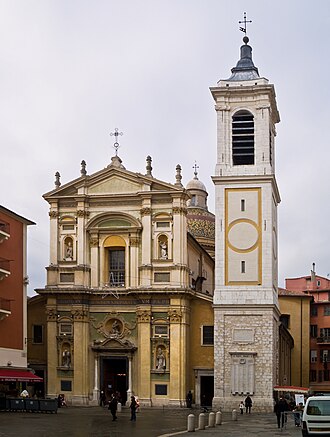
Nice’s main Catholic cathedral is located in the very heart of the Old Town, on Place Rossetti. It is dedicated to Saint Reparata, the patron saint of Nice.
The cathedral was built in the 17th century in the Baroque style. From the outside, it’s easy to walk right past it while strolling through the narrow streets of Vieux Nice, but the interior is surprisingly spacious and richly decorated.
It’s worth stopping by here while strolling through the Old Town—especially since Place Rossetti is one of the most pleasant spots in Vieux Nice.
Address: Place Rossetti, Nice.
Basilica of Notre-Dame de l’Assomption / Basilique Notre-Dame de l’Assomption
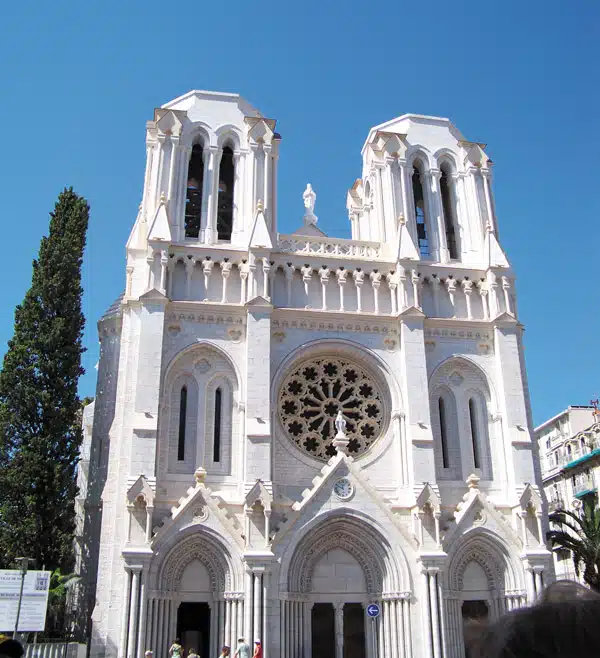
The basilica was built shortly after Nice became part of France in 1860. Its neo-Gothic façade with two towers stands in stark contrast to the Baroque architecture of the Old Town and resembles the grand cathedrals of northern France.
It’s located right on Avenue Jean Médecin—the main shopping street in the city center—so you usually don’t need to go out of your way to visit it.
Address: 2 rue d’Italie, Nice.
Notre-Dame-du-Port Church / Église Notre-Dame du Port
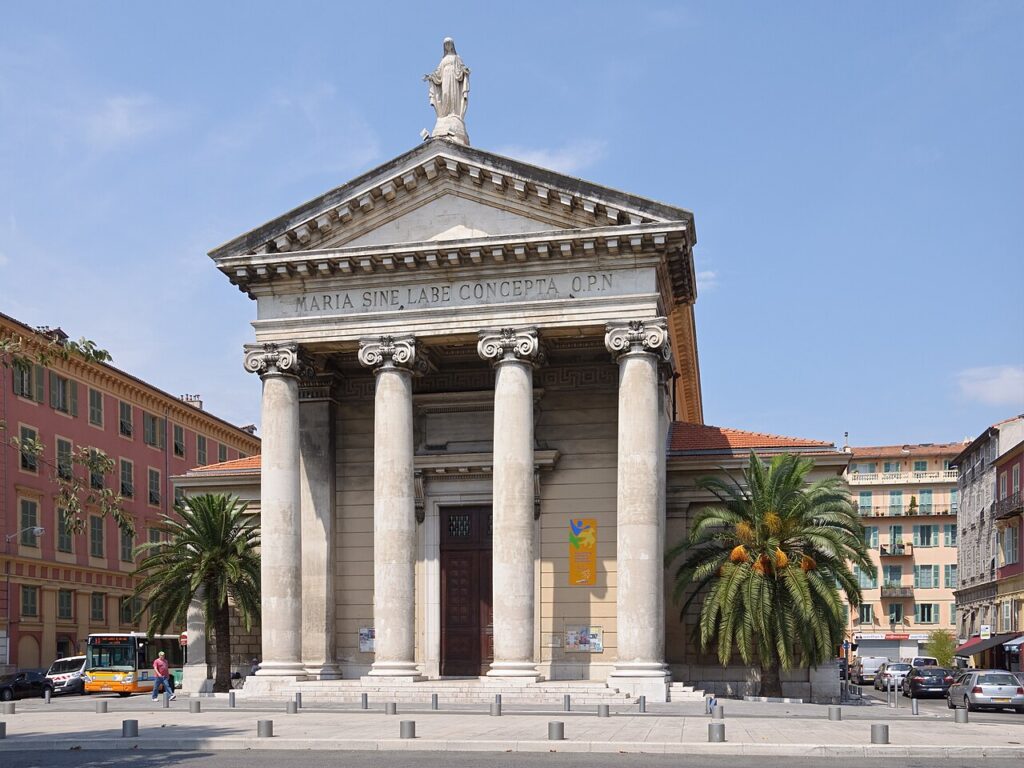
The Notre-Dame du Port Church stands at the far end of Île de Beauté Square and frames the view of the old port.
It was built in the 19th century, when a new city district was taking shape around Port Lympia. It is particularly interesting to view it from the harbor: the church, the symmetrical facades of the square, the boats, and the harbor come together as a single architectural ensemble.
This is a great place to stop by after walking down from Colline du Château and strolling around Port Lympia, and then continuing along the sea toward Coco Beach.
Address: Place Île de Beauté, Nice.
St. Nicholas Cathedral / Cathédrale Saint-Nicolas

The Russian presence in Nice has a long history. Since the mid-19th century, the French Riviera has been a favorite destination for the Russian aristocracy, and the city still boasts many buildings associated with it. The most prominent of these is the Orthodox Cathedral of St. Nicholas, built in the early 20th century.
Even if you have absolutely no interest in the history of Russian emigration, it’s worth coming here just to see the building itself: set amid palm trees and Mediterranean architecture, it looks completely unexpected. Address: Avenue Nicolas II, Nice.
Church of St. Joan of Arc / Église Sainte-Jeanne-d’Arc
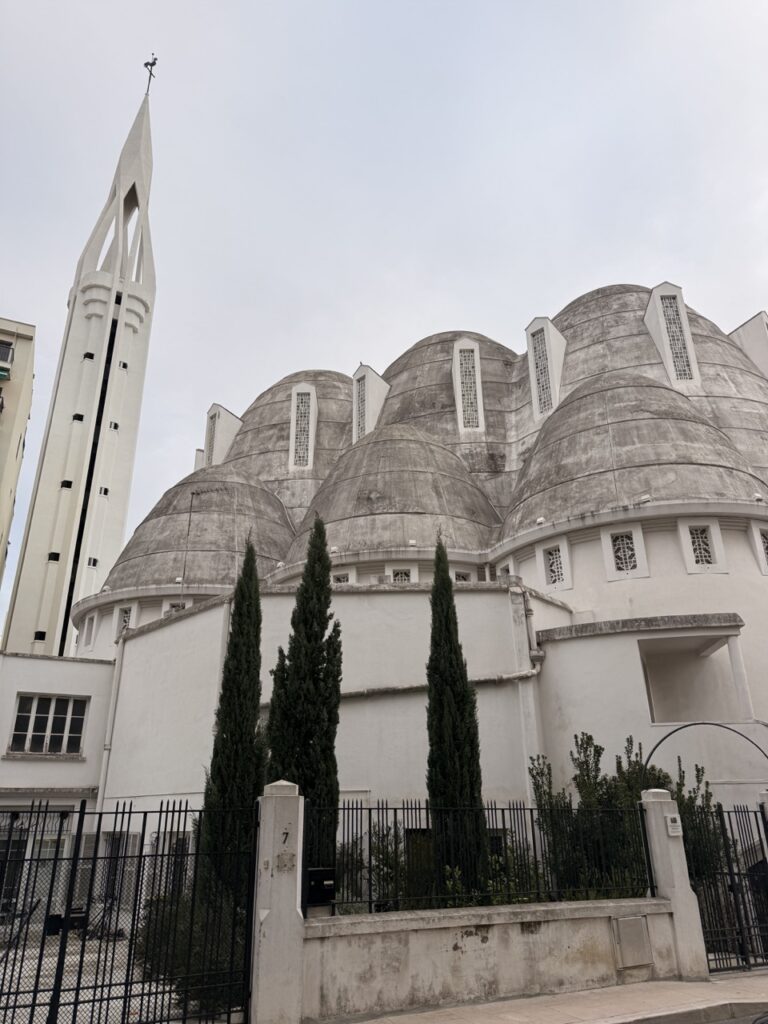
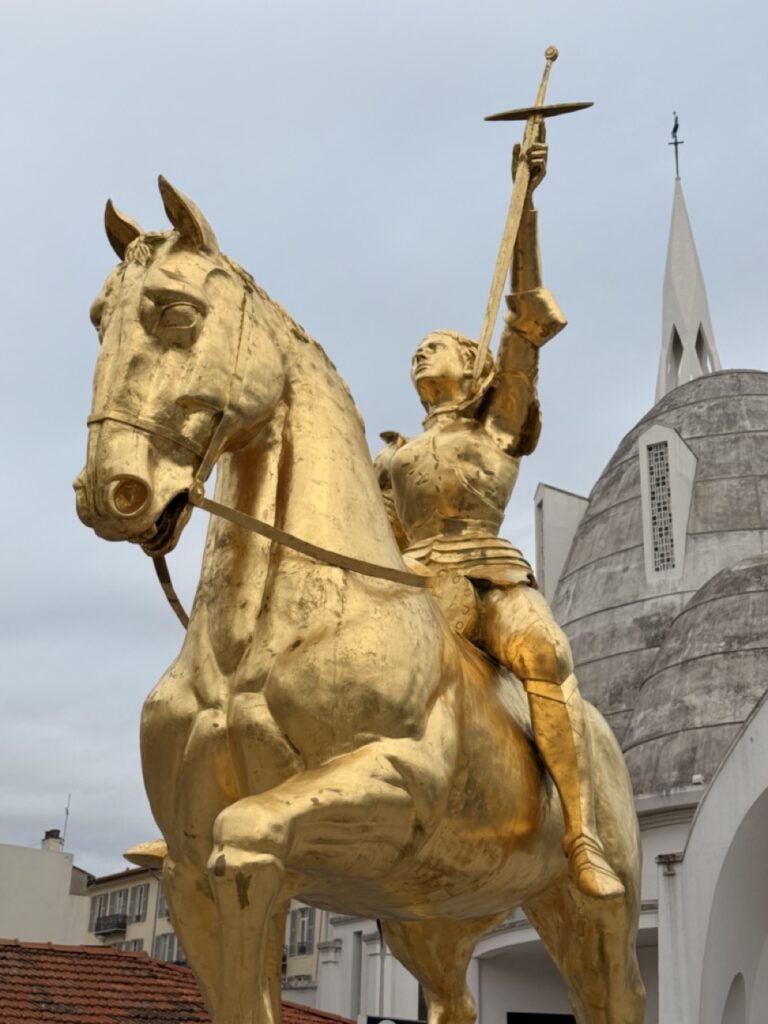
One of the most unusual churches in Nice is located a short distance off the usual tourist routes, in the Libération neighborhood.
The Church of St. Joan of Arc was built in the first half of the 20th century and bears no resemblance to the city’s traditional churches. The white building, with its smooth, curved lines, three large domes, and a tall, slender bell tower, has an almost futuristic appearance. Its architecture combines Art Nouveau, Art Deco, and experiments with reinforced concrete characteristic of the early 20th century.
This is definitely worth a visit if you’re interested in architecture. You can also combine a visit to the church with a stroll through the Libération neighborhood and its market on Avenue Malausséna—this is a much less touristy and more everyday side of Nice.
Address: 86 Avenue Saint-Lambert, Nice.